

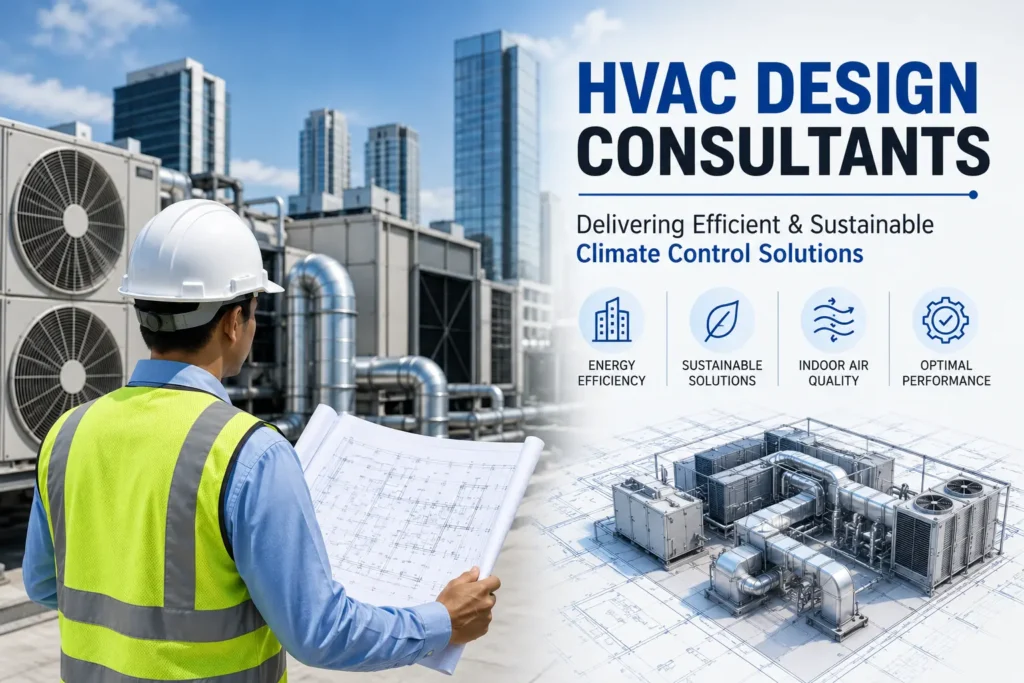
Modern buildings and industrial facilities require efficient heating, ventilation, and air conditioning systems to maintain comfortable indoor environments and ensure operational efficiency. As commercial, industrial, healthcare, educational, and infrastructure developments continue to expand, the demand for professional HVAC Design Consultants has increased significantly.
A well-designed HVAC system is essential for maintaining indoor air quality, controlling temperature, improving energy efficiency, and ensuring occupant comfort. Whether it is a manufacturing plant, commercial office, shopping complex, warehouse, pharmaceutical facility, hospital, or institutional building, HVAC systems play a critical role in overall building performance.
Professional HVAC Design Consultants help organizations develop customized HVAC solutions that align with project requirements, energy goals, regulatory standards, and operational objectives.
What Do HVAC Design Consultants Do?
HVAC Design Consultants specialize in planning, designing, analyzing, and optimizing heating, ventilation, and air conditioning systems for buildings and industrial facilities. Their role involves evaluating project requirements and creating HVAC solutions that deliver maximum efficiency while minimizing operational costs.
HVAC design is much more than installing air conditioning systems. It involves detailed engineering calculations, airflow analysis, load assessments, equipment selection, ventilation planning, ductwork design, and energy optimization.
Experienced HVAC Design Consultants ensure that every component of the HVAC system works efficiently to maintain desired environmental conditions while reducing energy consumption.
Importance of HVAC Design in Modern Buildings
An HVAC system directly impacts the comfort, health, productivity, and energy efficiency of a building. Poor HVAC design can lead to uneven temperatures, excessive energy consumption, inadequate ventilation, poor indoor air quality, and increased maintenance costs.
Professional HVAC Design Consultants help prevent these issues through comprehensive engineering and planning.
Key benefits of proper HVAC design include:
- Improved indoor air quality
- Enhanced thermal comfort
- Reduced energy costs
- Better ventilation performance
- Increased equipment lifespan
- Lower maintenance requirements
- Improved occupant productivity
- Regulatory compliance
An optimized HVAC system creates a comfortable and healthy indoor environment while contributing to long-term operational savings.
HVAC Design Process
Professional HVAC Design Consultants follow a structured design process to ensure project success.
Load Calculation and Analysis
The first step in HVAC design involves calculating heating and cooling loads. Factors such as building orientation, occupancy levels, equipment heat generation, lighting systems, insulation, and local climate conditions are carefully analyzed.
Accurate load calculations help determine the appropriate HVAC equipment capacity and prevent issues associated with oversizing or undersizing systems.
Ventilation Design
Ventilation is a critical component of any HVAC system. Proper ventilation ensures fresh air circulation, removes contaminants, and maintains healthy indoor environments.
HVAC Design Consultants evaluate air exchange requirements and design ventilation systems that comply with applicable standards and building regulations.
Equipment Selection
Selecting the right HVAC equipment is essential for efficiency and performance. Engineers evaluate various options based on project requirements, energy efficiency ratings, lifecycle costs, and maintenance considerations.
Equipment may include:
- Air Handling Units
- Chillers
- Cooling Towers
- VRF Systems
- Split Air Conditioning Systems
- Package Units
- Exhaust Systems
- Ventilation Equipment
The goal is to create a balanced and efficient HVAC solution tailored to the facility’s operational needs.
Ducting and Air Distribution Design
Ductwork plays a vital role in distributing conditioned air throughout a building. Poor duct design can result in energy losses, airflow restrictions, and occupant discomfort.
Professional HVAC Design Consultants develop optimized duct layouts that ensure efficient airflow and balanced air distribution.
Well-designed duct systems contribute to energy savings and improved indoor comfort.
Energy-Efficient HVAC Solutions
Energy efficiency has become a major priority for building owners and facility managers. HVAC systems account for a significant portion of a building’s energy consumption.
HVAC Design Consultants focus on designing systems that reduce energy usage while maintaining performance standards.
Energy-efficient strategies include:
- Variable Air Volume Systems
- High-Efficiency Chillers
- Energy Recovery Systems
- Demand-Controlled Ventilation
- Smart Building Controls
- Building Automation Systems
- Energy Monitoring Solutions
These technologies help reduce operational costs while supporting sustainability objectives.
HVAC Design for Industrial Facilities
Industrial environments have unique HVAC requirements due to manufacturing processes, equipment heat loads, and environmental control needs.
HVAC Design Consultants provide specialized solutions for:
- Manufacturing Plants
- Pharmaceutical Facilities
- Food Processing Units
- Warehouses
- Logistics Centers
- Data Centers
- Chemical Processing Facilities
Industrial HVAC systems must maintain precise temperature, humidity, and air quality conditions while ensuring operational reliability.
Professional HVAC engineering ensures compliance with industry standards and production requirements.
HVAC Design for Commercial Buildings
Commercial buildings require HVAC systems that provide comfort, efficiency, and reliability.
HVAC Design Consultants support projects such as:
- Office Buildings
- Shopping Malls
- Hotels
- Hospitals
- Educational Institutions
- Corporate Campuses
- Retail Developments
Each project requires customized HVAC solutions based on occupancy patterns, building usage, and energy goals.
Professional design improves occupant satisfaction while reducing long-term operational expenses.
Sustainable HVAC Engineering
Sustainability is becoming increasingly important in modern building design. HVAC Design Consultants integrate sustainable engineering principles to reduce environmental impact and improve building performance.
Sustainable HVAC strategies include:
- Green Building Integration
- Energy-Efficient Equipment
- Renewable Energy Compatibility
- Water Conservation Measures
- Carbon Footprint Reduction
- Smart Energy Management
These solutions contribute to lower operating costs and support green building certifications.
Benefits of Hiring HVAC Design Consultants
Partnering with experienced HVAC consultants offers several advantages:
- Professional Engineering Expertise
- Accurate System Design
- Reduced Energy Consumption
- Improved Indoor Air Quality
- Lower Operational Costs
- Enhanced Occupant Comfort
- Compliance with Industry Standards
- Long-Term System Reliability
Professional consultants help ensure that HVAC systems deliver optimal performance throughout their lifecycle.
Conclusion
As buildings become more complex and energy efficiency becomes increasingly important, the role of HVAC Design Consultants continues to grow. Professional HVAC engineering ensures that facilities maintain comfortable indoor environments while optimizing energy consumption and operational efficiency.
From industrial facilities and commercial buildings to healthcare and infrastructure projects, expert HVAC consultants provide customized solutions that improve performance, reduce costs, and support sustainable development. Investing in professional HVAC design is a critical step toward creating efficient, reliable, and future-ready buildings.
