
In today’s rapidly evolving construction and infrastructure industry, businesses require innovative, efficient, and sustainable solutions to meet their development goals. Whether it is an industrial facility, commercial building, institutional campus, or infrastructure project, the success of any development depends on proper planning, design, and execution. This is where Architectural and Engineering Consultancy Services play a critical role.
Architectural and Engineering Consultancy Services provide a comprehensive approach to project development by integrating architectural creativity with engineering expertise. These services ensure that projects are designed efficiently, comply with industry standards, meet operational requirements, and deliver long-term value to stakeholders.
Organizations across various industries rely on Architectural and Engineering Consultancy Services to optimize project performance, improve functionality, reduce risks, and achieve cost-effective project execution.
What Are Architectural and Engineering Consultancy Services?
Architectural and Engineering Consultancy Services involve professional planning, design, engineering, and project support solutions that guide projects from concept to completion. These services combine architectural design with multiple engineering disciplines to create functional, safe, sustainable, and efficient developments.
The primary objective is to provide integrated solutions that address both aesthetic and technical requirements while ensuring seamless project coordination.
These services typically include:
- Architectural Design
- Structural Engineering
- Mechanical Engineering
- Electrical Engineering
- Plumbing Engineering
- HVAC Design
- Utility Engineering
- Project Management Consultancy
- Construction Management
- Sustainable Design Solutions
By integrating these disciplines, Architectural and Engineering Consultancy Services help clients achieve superior project outcomes while maintaining quality, budget, and schedule objectives.
Importance of Architectural and Engineering Consultancy Services
Modern projects are becoming increasingly complex. From regulatory requirements and sustainability standards to operational efficiency and technological integration, project developers face numerous challenges throughout the development process.
Architectural and Engineering Consultancy Services help organizations overcome these challenges by providing expert guidance, technical knowledge, and strategic planning.
Some key benefits include:
- Better project planning
- Optimized design solutions
- Improved operational efficiency
- Reduced project risks
- Cost-effective construction
- Regulatory compliance
- Enhanced sustainability
- Improved project coordination
Professional consultancy services ensure that every aspect of a project is carefully planned and executed to achieve long-term success.
Architectural Design Services
Architecture serves as the foundation of any development project. Effective architectural design not only enhances visual appeal but also improves functionality, efficiency, and user experience.
Architectural and Engineering Consultancy Services focus on creating designs that balance aesthetics with practicality. Architects work closely with clients to understand project objectives, operational requirements, and future growth plans.
Architectural design services may include:
- Concept Development
- Space Planning
- Master Planning
- Building Design
- Industrial Facility Design
- Commercial Building Design
- Institutional Design
- Sustainable Design Solutions
A well-planned architectural design improves project performance while supporting long-term business objectives.
Engineering Design Solutions
Engineering is the backbone of every successful project. Engineering professionals ensure that architectural concepts are technically feasible, structurally sound, and operationally efficient.
Architectural and Engineering Consultancy Services integrate multiple engineering disciplines to create comprehensive project solutions.
Engineering services commonly include:
Structural Engineering
Structural engineering ensures that buildings and facilities remain safe, stable, and durable throughout their lifecycle.
Services include:
- Structural Analysis
- Foundation Design
- RCC Design
- Steel Structure Design
- Structural Optimization
Mechanical Engineering
Mechanical systems play a vital role in building operations and industrial processes.
Services include:
- HVAC Design
- Ventilation Systems
- Utility Engineering
- Mechanical Equipment Planning
Electrical Engineering
Electrical engineering solutions ensure reliable and efficient power distribution.
Services include:
- Electrical Design
- Power Distribution Systems
- Lighting Design
- Backup Power Solutions
- Energy Management Systems
Plumbing Engineering
Plumbing systems support water distribution, drainage, and sanitation requirements.
Services include:
- Water Supply Design
- Drainage Systems
- Rainwater Harvesting Solutions
- Plumbing Infrastructure Planning
Integrated Design Approach
One of the greatest advantages of Architectural and Engineering Consultancy Services is the integrated design approach.
Instead of working independently, architects and engineers collaborate from the earliest stages of project development. This coordination minimizes design conflicts, improves efficiency, and reduces costly changes during construction.
Integrated project planning provides:
- Faster project delivery
- Improved design coordination
- Better cost control
- Enhanced project quality
- Reduced construction risks
This collaborative approach is particularly beneficial for industrial and infrastructure projects that require complex engineering solutions.
Architectural and Engineering Consultancy Services for Industrial Projects
Industrial projects require specialized expertise due to their operational complexity and technical requirements.
Architectural and Engineering Consultancy Services support industrial developments through:
- Industrial Master Planning
- Manufacturing Facility Design
- Utility Infrastructure Planning
- Plant Layout Design
- Structural Engineering
- Process Support Engineering
- Construction Management
By integrating architecture and engineering, consultants create facilities that maximize productivity, efficiency, and safety.
Sustainable Architectural and Engineering Consultancy Services
Sustainability has become an essential component of modern development.
Architectural and Engineering Consultancy Services help organizations implement environmentally responsible solutions through:
- Green Building Design
- Energy-Efficient Systems
- Sustainable Construction Practices
- Water Conservation Strategies
- Renewable Energy Integration
Sustainable designs reduce environmental impact while lowering long-term operating costs.
Project Management and Construction Support
Successful projects require effective coordination throughout the construction phase.
Architectural and Engineering Consultancy Services often include project management and construction support to ensure that projects are delivered according to approved plans and specifications.
These services include:
- Project Planning
- Schedule Management
- Cost Control
- Contractor Coordination
- Site Supervision
- Quality Assurance
- Risk Management
Construction support services help maintain project quality while ensuring timely completion.
Benefits of Architectural and Engineering Consultancy Services
Organizations investing in professional Architectural and Engineering Consultancy Services can achieve several advantages:
Improved Design Quality
Integrated planning leads to better project outcomes.
Cost Optimization
Efficient designs reduce unnecessary construction and operational costs.
Risk Mitigation
Professional consultancy minimizes technical and project-related risks.
Regulatory Compliance
Experts ensure compliance with industry standards and local regulations.
Enhanced Sustainability
Green building strategies improve environmental performance.
Long-Term Value
Well-designed projects provide lasting operational and financial benefits.
Conclusion
Architectural and Engineering Consultancy Services are essential for the successful planning, design, and execution of modern development projects. By combining architectural creativity with engineering expertise, these services provide comprehensive solutions that improve efficiency, reduce risks, and deliver long-term value.
Whether developing industrial facilities, commercial buildings, infrastructure projects, or institutional developments, Architectural and Engineering Consultancy Services help organizations achieve sustainable, cost-effective, and high-quality project outcomes. Through integrated design, engineering excellence, and professional project management, businesses can confidently transform their vision into reality.
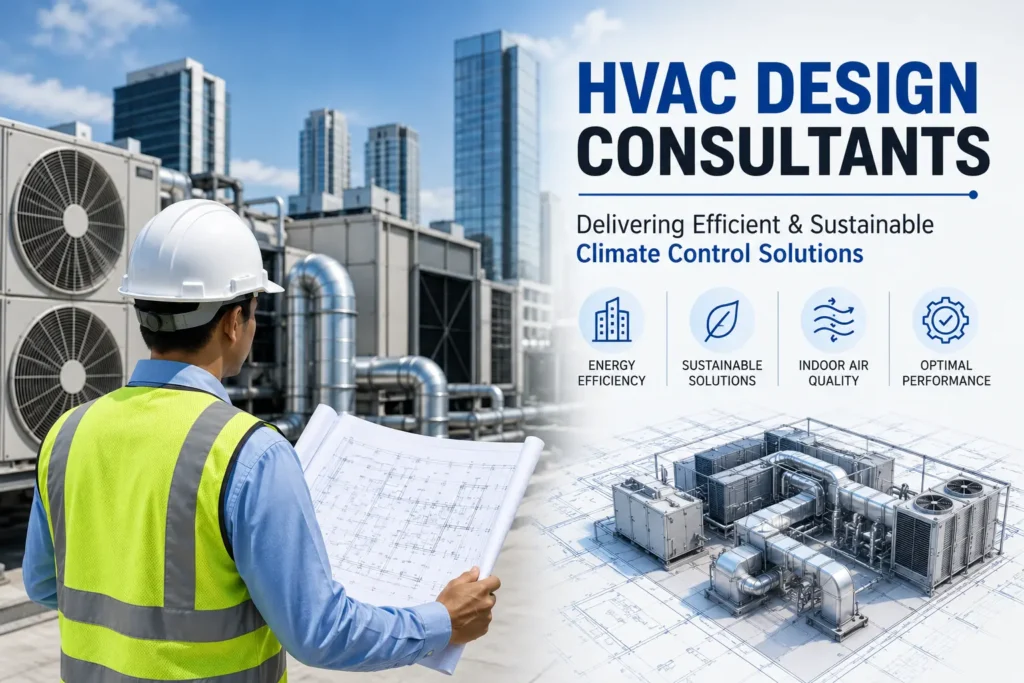
HVAC Design Consultants: Delivering Efficient and Sustainable Climate Control Solutions
Modern buildings and industrial facilities require efficient heating, ventilation, and air conditioning systems to maintain comfortable indoor environments and ensure operational efficiency. As commercial, industrial, healthcare, educational, and infrastructure developments continue to expand, the demand for professional HVAC Design Consultants has increased significantly.
A well-designed HVAC system is essential for maintaining indoor air quality, controlling temperature, improving energy efficiency, and ensuring occupant comfort. Whether it is a manufacturing plant, commercial office, shopping complex, warehouse, pharmaceutical facility, hospital, or institutional building, HVAC systems play a critical role in overall building performance.
Professional HVAC Design Consultants help organizations develop customized HVAC solutions that align with project requirements, energy goals, regulatory standards, and operational objectives.
What Do HVAC Design Consultants Do?
HVAC Design Consultants specialize in planning, designing, analyzing, and optimizing heating, ventilation, and air conditioning systems for buildings and industrial facilities. Their role involves evaluating project requirements and creating HVAC solutions that deliver maximum efficiency while minimizing operational costs.
HVAC design is much more than installing air conditioning systems. It involves detailed engineering calculations, airflow analysis, load assessments, equipment selection, ventilation planning, ductwork design, and energy optimization.
Experienced HVAC Design Consultants ensure that every component of the HVAC system works efficiently to maintain desired environmental conditions while reducing energy consumption.
Importance of HVAC Design in Modern Buildings
An HVAC system directly impacts the comfort, health, productivity, and energy efficiency of a building. Poor HVAC design can lead to uneven temperatures, excessive energy consumption, inadequate ventilation, poor indoor air quality, and increased maintenance costs.
Professional HVAC Design Consultants help prevent these issues through comprehensive engineering and planning.
Key benefits of proper HVAC design include:
- Improved indoor air quality
- Enhanced thermal comfort
- Reduced energy costs
- Better ventilation performance
- Increased equipment lifespan
- Lower maintenance requirements
- Improved occupant productivity
- Regulatory compliance
An optimized HVAC system creates a comfortable and healthy indoor environment while contributing to long-term operational savings.
HVAC Design Process
Professional HVAC Design Consultants follow a structured design process to ensure project success.
Load Calculation and Analysis
The first step in HVAC design involves calculating heating and cooling loads. Factors such as building orientation, occupancy levels, equipment heat generation, lighting systems, insulation, and local climate conditions are carefully analyzed.
Accurate load calculations help determine the appropriate HVAC equipment capacity and prevent issues associated with oversizing or undersizing systems.
Ventilation Design
Ventilation is a critical component of any HVAC system. Proper ventilation ensures fresh air circulation, removes contaminants, and maintains healthy indoor environments.
HVAC Design Consultants evaluate air exchange requirements and design ventilation systems that comply with applicable standards and building regulations.
Equipment Selection
Selecting the right HVAC equipment is essential for efficiency and performance. Engineers evaluate various options based on project requirements, energy efficiency ratings, lifecycle costs, and maintenance considerations.
Equipment may include:
- Air Handling Units
- Chillers
- Cooling Towers
- VRF Systems
- Split Air Conditioning Systems
- Package Units
- Exhaust Systems
- Ventilation Equipment
The goal is to create a balanced and efficient HVAC solution tailored to the facility’s operational needs.
Ducting and Air Distribution Design
Ductwork plays a vital role in distributing conditioned air throughout a building. Poor duct design can result in energy losses, airflow restrictions, and occupant discomfort.
Professional HVAC Design Consultants develop optimized duct layouts that ensure efficient airflow and balanced air distribution.
Well-designed duct systems contribute to energy savings and improved indoor comfort.
Energy-Efficient HVAC Solutions
Energy efficiency has become a major priority for building owners and facility managers. HVAC systems account for a significant portion of a building’s energy consumption.
HVAC Design Consultants focus on designing systems that reduce energy usage while maintaining performance standards.
Energy-efficient strategies include:
- Variable Air Volume Systems
- High-Efficiency Chillers
- Energy Recovery Systems
- Demand-Controlled Ventilation
- Smart Building Controls
- Building Automation Systems
- Energy Monitoring Solutions
These technologies help reduce operational costs while supporting sustainability objectives.
HVAC Design for Industrial Facilities
Industrial environments have unique HVAC requirements due to manufacturing processes, equipment heat loads, and environmental control needs.
HVAC Design Consultants provide specialized solutions for:
- Manufacturing Plants
- Pharmaceutical Facilities
- Food Processing Units
- Warehouses
- Logistics Centers
- Data Centers
- Chemical Processing Facilities
Industrial HVAC systems must maintain precise temperature, humidity, and air quality conditions while ensuring operational reliability.
Professional HVAC engineering ensures compliance with industry standards and production requirements.
HVAC Design for Commercial Buildings
Commercial buildings require HVAC systems that provide comfort, efficiency, and reliability.
HVAC Design Consultants support projects such as:
- Office Buildings
- Shopping Malls
- Hotels
- Hospitals
- Educational Institutions
- Corporate Campuses
- Retail Developments
Each project requires customized HVAC solutions based on occupancy patterns, building usage, and energy goals.
Professional design improves occupant satisfaction while reducing long-term operational expenses.
Sustainable HVAC Engineering
Sustainability is becoming increasingly important in modern building design. HVAC Design Consultants integrate sustainable engineering principles to reduce environmental impact and improve building performance.
Sustainable HVAC strategies include:
- Green Building Integration
- Energy-Efficient Equipment
- Renewable Energy Compatibility
- Water Conservation Measures
- Carbon Footprint Reduction
- Smart Energy Management
These solutions contribute to lower operating costs and support green building certifications.
Benefits of Hiring HVAC Design Consultants
Partnering with experienced HVAC consultants offers several advantages:
- Professional Engineering Expertise
- Accurate System Design
- Reduced Energy Consumption
- Improved Indoor Air Quality
- Lower Operational Costs
- Enhanced Occupant Comfort
- Compliance with Industry Standards
- Long-Term System Reliability
Professional consultants help ensure that HVAC systems deliver optimal performance throughout their lifecycle.
Conclusion
As buildings become more complex and energy efficiency becomes increasingly important, the role of HVAC Design Consultants continues to grow. Professional HVAC engineering ensures that facilities maintain comfortable indoor environments while optimizing energy consumption and operational efficiency.
From industrial facilities and commercial buildings to healthcare and infrastructure projects, expert HVAC consultants provide customized solutions that improve performance, reduce costs, and support sustainable development. Investing in professional HVAC design is a critical step toward creating efficient, reliable, and future-ready buildings.